Caliche is the reason
If you are new to the Hill Country, this is the thing nobody warns you about. Caliche roads and drives are firm, pale, and completely reassuring in the dry. Add rain and the top layer turns to grease over a hard base, which means you get all of the sliding and none of the digging in. Vehicles do not sink so much as slide, and they slide toward whichever side drops away.
It is the single most common cause of a Hill Country recovery and it catches locals as often as visitors, because the road you drove yesterday is a genuinely different road today. Wimberley Towing pulls vehicles out of it every week, on the ranch roads around Wimberley, the caliche drives out to the acreage properties near Dripping Springs, and the county roads through Blanco.
Ditches that are steeper than they look
A Hill Country bar ditch is cut to move water fast, which means it is deeper and steeper than a roadside ditch anywhere flat. Once a vehicle is in one, the angle usually means the wheels have no useful traction and the body is resting on ground rather than suspension. That is a winch job from the moment it happens, and trying to drive out generally digs it in further and damages the underside.
Low water crossings
These deserve their own warning, because they kill people in Texas every single year. A crossing that is ankle deep can be moving water within minutes of a storm you cannot see, upstream and miles away. Water does not have to be deep to move a car: six inches will float most vehicles enough to lose traction, and two feet will carry one away.
If you are already in one and the vehicle is not moving, get out on the upstream side if you can safely do it, get to high ground, and call from there. Do not sit in the car waiting to see what the water does, and do not go back for anything. Turn around, do not drown, is not a slogan, it is arithmetic.
Once the water is down, the recovery is a winch job, and the vehicle is going to a workshop rather than home. Water in the engine, the transmission, or the electrics is not something a tow fixes, and we will be straight with you about that rather than quietly delivering a write-off to your driveway.
What we do about it
Line, an anchor, and an angle that pulls the vehicle back the way it came rather than dragging it sideways into the thing it slid off. The anchor gets chosen before the line goes on. If the ground will not hold, we reposition rather than pulling harder, because pulling harder on bad ground is how a recovery becomes an incident.
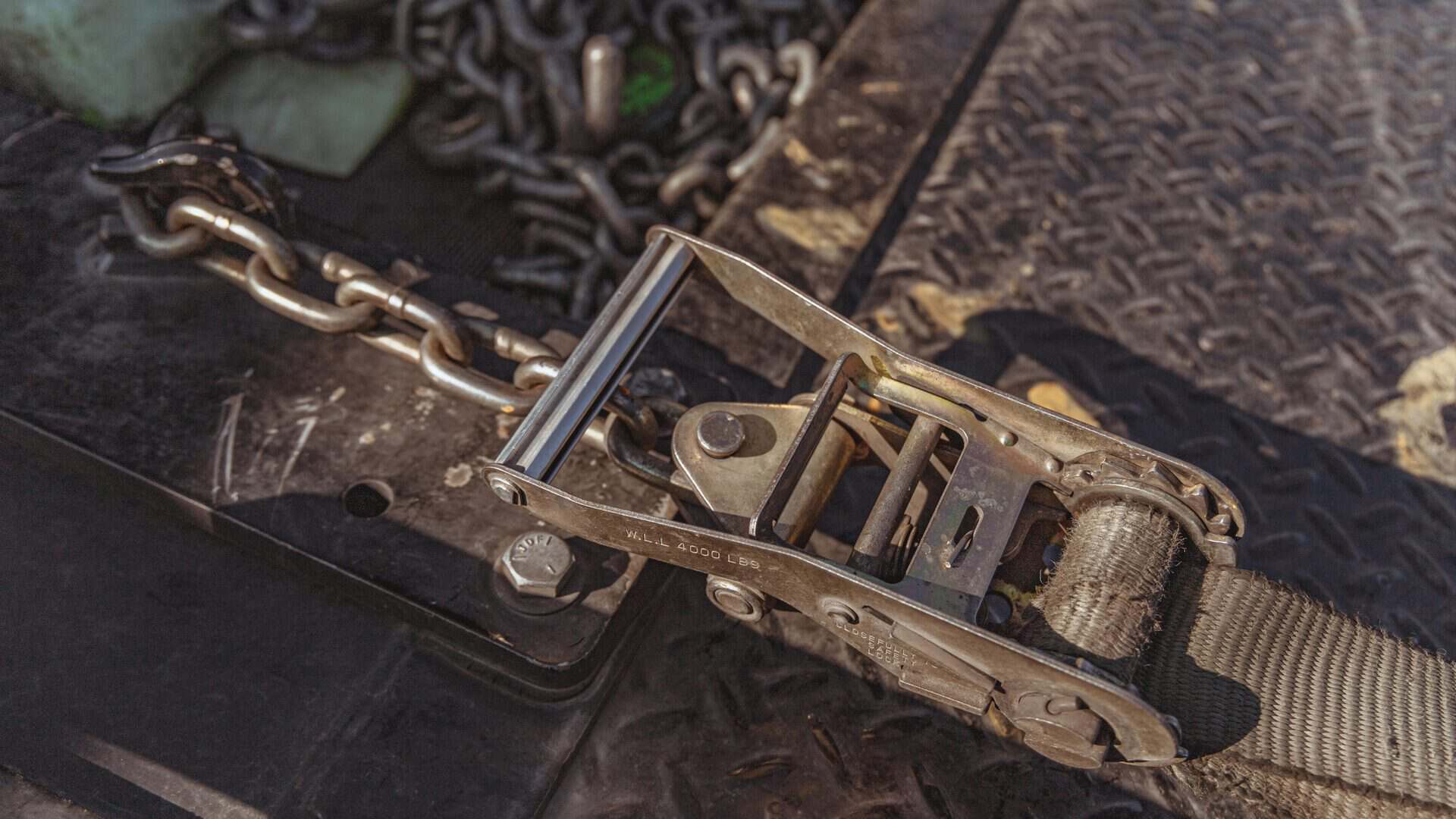
What we do not do is put a strap between two pickups and hope. Recovery straps store energy, and when a hook lets go it comes back through a windscreen.
What to tell dispatch
Where you are, how far off the road you are, what the ground is like, and whether the vehicle is upright. If there is water involved, say so first, because that changes everything about the timing and the approach. Call (512) 375-1215.
Related recovery services
The straight pull is a winch-out service. After a wreck it is accident recovery. Both sit under off-road recovery, and once the vehicle is back on the road it may need flatbed towing.
What a mud or ditch recovery costs
It depends on the ground far more than on the distance. Wet caliche on a slope with no anchor point is a slow, careful job. A car in a firm ditch a metre from the road is not. Tell dispatch what the ground is doing and you will get a real number before anybody sets off. See towing rates.
After a flood, be realistic
If water got above the sills, into the engine bay, or into the cabin, the vehicle is very probably a total loss and no amount of recovering it changes that. We will still get it out, and we will take it wherever you need, but we are not going to tell you it will be fine when it will not be. Photograph the water line before it moves. Your insurer will want it.
Stuck in mud, and why it is a winch out service
If your vehicle is stuck in mud, that is emergency vehicle recovery rather than a tow, and it is a winch out service that gets you moving. Spinning the wheels digs you in further, and every minute of it makes the recovery longer and more expensive.
Stop, get out safely if it is safe to do so, look at what the vehicle is actually sitting on, and call (512) 375-1215. Being stuck is a nuisance. Making it worse is optional.