A hook lifts, a winch pulls
That distinction is the whole job. A tow truck that arrives to lift a car cannot do much with a pickup that is four metres down a slope in wet caliche. Getting it back to the road needs line, an anchor, an angle, and a driver who has done it before and knows what the ground will do when the load comes on.
Wimberley Towing carries recovery equipment on the trucks because out here these calls are routine rather than exotic. Our drivers are WreckMaster certified, which is a recognised training standard for towing and recovery, and it matters more on a winch-out than on any other kind of call.
What actually puts vehicles off the road here
- Caliche after rain. It packs hard and dry, then turns to grease the moment it gets wet. You get all of the sliding and none of the digging in. It is the single most common cause of a Hill Country winch-out.
- Shoulder drop-offs. A lot of these roads do not have a shoulder so much as an edge. Two wheels off and the vehicle is committed, because the ground falls away rather than levelling out.
- Soft verges and overflow parking. A field used as a car park after a wet week is a recovery, not a tow, and the venues on the tasting trail produce a steady run of these.
- Boat ramps. A wet ramp with a loaded trailer is a winch job, and around Canyon Lake it is an ordinary weekend call.
- Getting it wrong off-road. Sometimes the vehicle was always going to end up there. No judgement. We still have to get it out.
Four things to tell dispatch
These four answers decide whether the first truck out is the one that can actually pull you, and getting them right is the difference between one visit and two:
- Where you are. A cross road, a gate number, a landmark, or a pin.
- How far off the road the vehicle is. A metre and four metres are completely different jobs.
- What the ground is like. Mud, caliche, water, sand, gravel, or a rock ledge.
- Whether the vehicle is upright. If it is on its side or its roof, lead with that.
Please do not try it with a strap
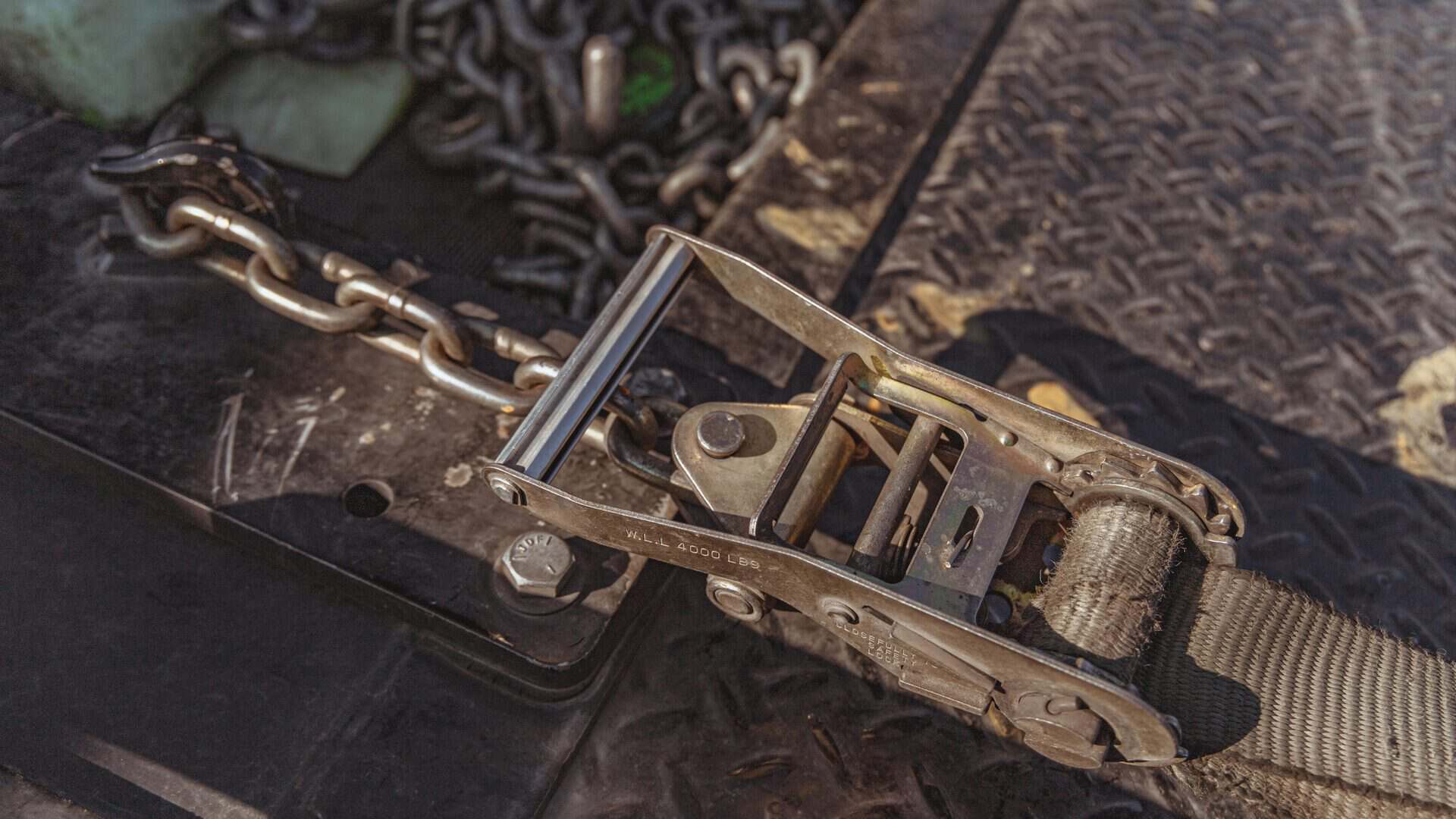
A tow strap between two pickups is how people get hurt, and it is the part of this job that looks easiest from the outside. Recovery straps store energy like a rubber band, and when a hook, a shackle, or a mounting point lets go, it comes back through a windscreen at speed. A ball hitch is not a recovery point and has killed people. Somebody in Texas finds this out every year.
If a stranger with a truck and a strap offers to help, thank them and wait for us. The cost of the recovery is a great deal less than the cost of the alternative.
What we do differently
The pull goes back the way the vehicle came in, not sideways into whatever it slid off. Anchors are chosen before the line goes on, not after it fails. If the ground will not hold, we do not simply pull harder. And the recovery is planned out loud, so you know what is about to happen to your vehicle before it happens.
What happens to the vehicle afterwards
Once the vehicle is back on the pavement, it may drive away, or it may need a deck. Mud in the brakes, a bent control arm, or a damaged sump are all common after a slide, and we will tell you honestly which it is. If it needs to go, that is flatbed towing.
Part of our off-road recovery service, alongside mud and ditch recovery and accident recovery. Call (512) 375-1215, 24 hours a day.
What a winch-out costs
Recovery is not priced like a tow, because it is not a tow. What moves the number is how far off the road the vehicle is, what the ground is doing, whether we can reach a solid anchor, and how long the pull takes. A car a metre off a firm shoulder is a quick job. A truck four metres down a wet slope is not.
Dispatch will give you a number before we set off, based on what you describe. That is why the four questions matter, and why an honest answer to them gets you an honest price. See towing rates.
What happens to the vehicle afterwards
Once it is back on the pavement it may well drive away. It may also have mud packed into the brakes, a bent control arm, a torn sump, or a wheel that is no longer pointing where it should. We will tell you which, and if it needs a deck rather than a drive home, that is flatbed towing.
Stuck? What winch out service actually means
If you are stuck, the phrase you want is winch out service, and it is not the same thing as a tow. A tow moves a vehicle that can roll. A winch out service recovers a vehicle that cannot, because it is off the road, in mud, in a ditch, on a slope, or on ground that will not give it back.
People search for it in a dozen ways: stuck in mud, stuck in a ditch, vehicle recovery, emergency winch out. They all describe the same job, and Wimberley Towing runs it 24 hours a day out of three yards. If you are stuck somewhere in the Hill Country, you are describing a winch out, and dispatch will know that from the first sentence.
Emergency vehicle recovery, safely
Emergency vehicle recovery is the part of this work where being in a hurry gets people hurt. A stuck vehicle is frustrating and there is always a strong temptation to solve it right now with whatever is to hand. That is exactly when a strap fails, an anchor point tears out, or a vehicle rolls further down the slope it was already on.
We would rather take ten more minutes and do it safely than get you moving fast and put somebody in hospital. If you are stuck and safe, you are in a much better position than you feel. Stay with the vehicle, stay out of the traffic side, and call (512) 375-1215.