When the vehicle is not on the road anymore
A hook lifts. A winch pulls. Once a vehicle has left the pavement and gone down a shoulder, into a ditch, into soft ground, or into a low water crossing, lifting it is not the problem to solve. Getting it back up to the road is, and that takes line, an anchor, an angle, and a driver who has done it before.
Out here this is routine rather than exotic. Wimberley Towing carries recovery equipment on the trucks because the Hill Country produces these calls constantly, and our drivers are WreckMaster certified, which is a recognised training standard for towing and recovery rather than a sticker on a door.
Caliche is usually the reason
If you are new to the Hill Country, this is the thing nobody warns you about. Caliche roads and drives are firm, pale, and completely reassuring in the dry. Add rain and the top layer turns to grease over a hard base, which means you get all of the sliding and none of the digging in. Vehicles do not sink so much as slide, and they slide toward whichever side drops away.
It is the single most common cause of a Hill Country winch-out, and it catches locals as often as it catches visitors. See mud and ditch recovery.
Shoulders that are really edges
A lot of these roads do not have a shoulder so much as an edge. Two wheels off Ranch Road 12 or Ranch Road 32 and the vehicle is committed, because the ground falls away rather than levelling out. The Devil’s Backbone runs a ridge with drop-offs on both sides, and when a car leaves that road it does not stop politely at the verge.
Low water crossings
These deserve their own warning. A crossing that is ankle deep can be moving water within minutes of a storm upstream, and water does not have to be deep to move a car. If you are already in one and the vehicle is not moving, get out on the upstream side if you can safely do it, get to high ground, and call from there. Do not sit in the car waiting to see what happens.
Once the water is down the recovery is a winch job, and the vehicle is going to a workshop rather than home. Water in the engine or the electrics is not something a tow fixes, and we will be straight with you about that on scene.
Winch-outs, and what decides the truck
Most recovery calls are a straight winch-out service. Four details decide whether the first truck out is the one that can actually pull you, so lead with them when you call (512) 375-1215:
- Where you are. A cross road, a gate number, or a landmark.
- How far off the road the vehicle is. A metre and four metres are different jobs.
- What the ground is like. Mud, caliche, water, sand, or a rock ledge.
- Whether the vehicle is upright. If it is on its side or its roof, say so first.
After a wreck
If anyone is hurt, call 911 before you call a tow truck. Afterwards, a damaged vehicle frequently cannot roll at all. Bent suspension, a seized wheel, or a wheel no longer pointing the same way as the others means dragging it is not an option and a wheel-lift will make the damage worse. It gets winched onto a deck instead. That is accident recovery, and on a scene with law enforcement present it is also about clearing the road without creating a second incident.
Please do not try it with a strap
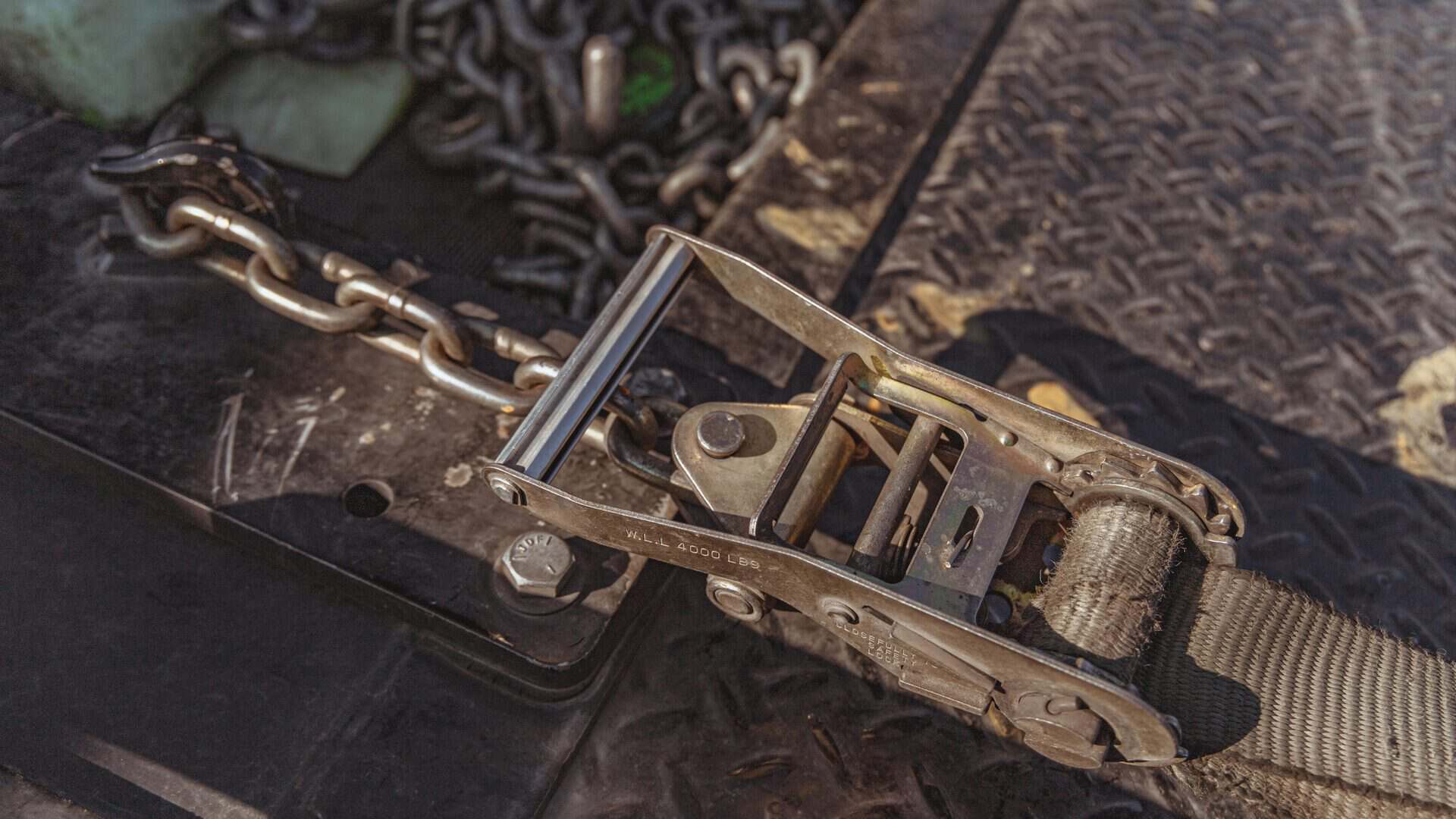
A tow strap between two pickups is how people get hurt, and it is the part of this job that looks easiest from the outside. Recovery straps store energy, and when a hook or a mounting point lets go it comes back through a windscreen at speed. Every year somebody in Texas finds this out.
Where these calls come from
The back roads around Wimberley, the ranch roads through Blanco and Johnson City, the caliche drives out to the acreage properties near Dripping Springs, and the boat ramps around Canyon Lake, where a wet ramp with a loaded trailer is a normal call.
If the vehicle is back on the pavement and simply will not run, that is a straight tow. See towing services, or roadside assistance if it might just be a battery.
Stuck, and what to call it when you ring
People describe this a dozen ways: stuck in mud, stuck in a ditch, off the road, in the creek, emergency vehicle recovery, or simply “I need a winch out service”. They are all the same job, and none of them is a tow.
The distinction matters because it decides the truck. A vehicle that can roll gets towed. A vehicle that cannot, because it is off the pavement, needs recovering first and towing second, if at all. Say you are stuck and where, and Wimberley Towing will send the right equipment rather than something that has to turn around and come back.